Quick answer
What to do first
Open the official experience, learn one short movement section, save your extra jumps for the next obstacle, and repeat bike approaches before trying to race.
Learn the movement loop, +1 Speed context, extra double jumps, bike tricks, escape biomes, and reset recovery in the Roblox experience.
Open the official experience, learn one short movement section, save your extra jumps for the next obstacle, and repeat bike approaches before trying to race.
Read the game-specific context before following the checklist.
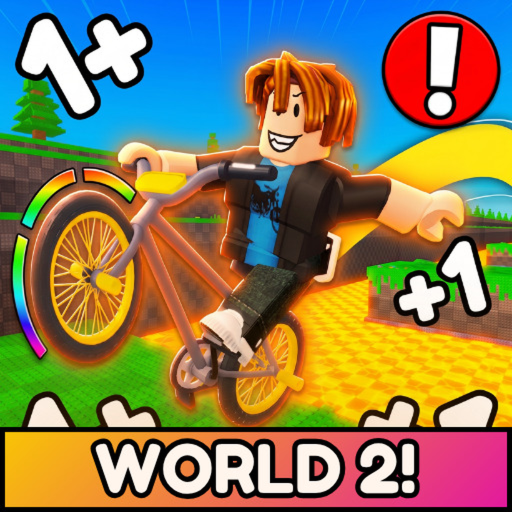
The public Roblox description says that players gain +1 Speed every time they move. That gives a clear first-session goal: understand how movement feels in the current run before chasing an unlisted speed cap or a predicted finish time. Choose a short ramp, landing, or gap that you can see repeatedly. Record only values the experience exposes, then use the planner for arithmetic from your own inputs.
The same description mentions extra double jumps. The count and timing can vary by the current experience, so this guide does not invent a default. Count the jumps available in your run, watch the next obstacle, and save the option that gives you the best recovery chance. A clean jump plan is easier to improve than a fast attempt that resets before the key gap.
Bike riding and tricks are named parts of the public game description. Practice the approach into a jump, the landing after a trick, and the section that sends you backward. A bike that feels fast in one segment is not automatically the best choice everywhere; no complete public bike roster or multiplier table is available yet.
Keep the section stable, record one change, and expand only after the current obstacle becomes repeatable.
Use the official Roblox link and confirm the title before applying any third-party route advice.
Label the first ramp, gap, landing, or turn you can observe in the current run.
Use the visible jump count and preserve an option for the obstacle most likely to cause a reset.
Keep the section stable, change one decision, and note whether the reset point moves.
Slow down the first failed section, keep one jump available for it, and retry the same approach before changing the whole route.
Leave the target field empty. The planner can still give an observation checklist without creating a fake threshold.
Test it in the exact experience and treat the video as community context rather than an official instruction.
Similar titles do not prove the same code, reward, or movement rules.
Keep a recovery decision for the obstacle that can send the run back.
One changed decision makes the result easier to understand.
Learn one repeatable movement section and observe how speed, bike control, and jumps interact.
No public speed cap was established in the current research pass.
The public description mentions bike riding and tricks but does not publish a complete requirement list.
The description warns that a wrong move may send a player back. Record the failed section and practice that decision.